
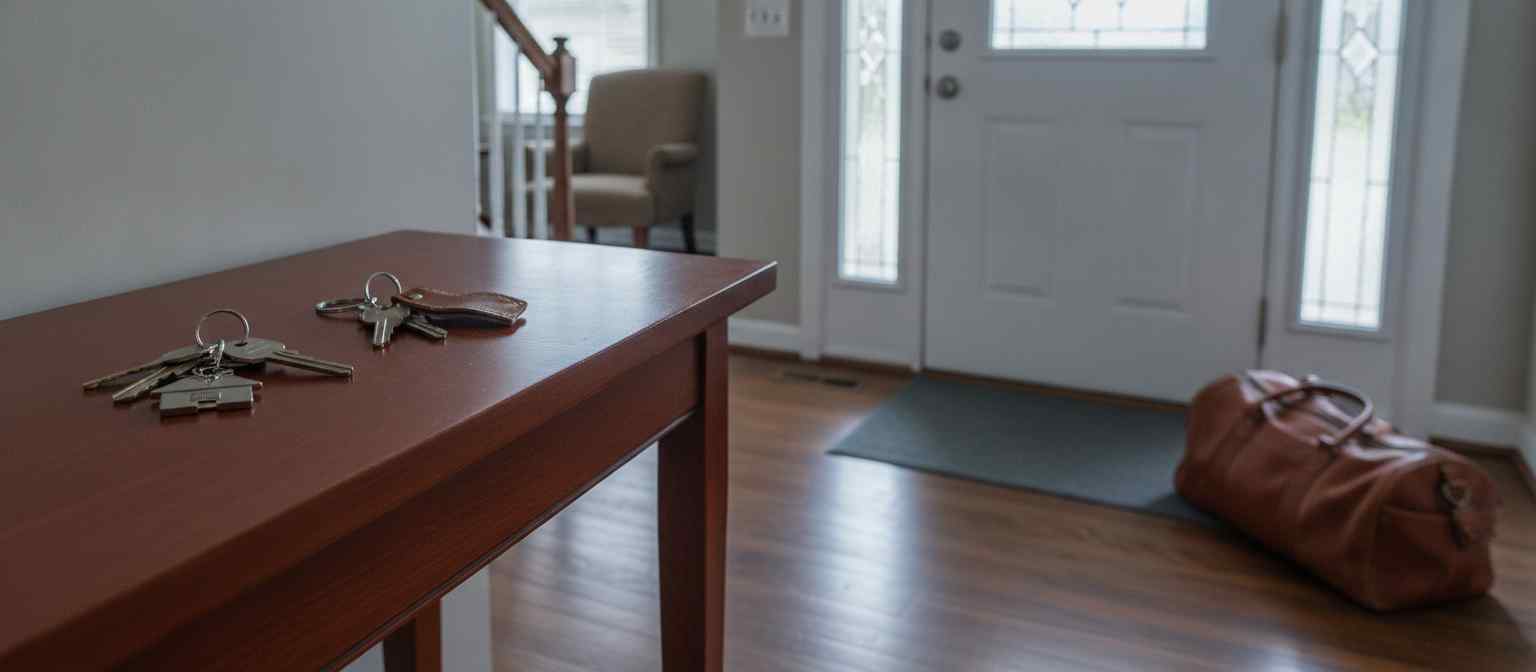
Figuring out who stays in the marital home is often one of the toughest parts of an Illinois divorce. Both spouses may feel they have a right to remain, especially if they have paid the mortgage, taken care of the property, or raised children there. Tensions can rise if one spouse refuses to leave, threatens to change the locks, or insists the other move out right away. These issues get even more complicated when children are involved or when neither spouse can afford to live elsewhere. Illinois divorce law offers ways to handle disagreements about who stays in the home and how property is divided. At Gordon & Perlut, LLC, we help clients across Chicago and Illinois understand their rights, seek the right court orders, and protect their finances and parental roles during divorce.
Neither spouse automatically gets to stay in the marital home just because they filed for divorce first or make more money. Even if the home is in one spouse’s name, the other may still have rights under Illinois law. Under the Illinois Marriage and Dissolution of Marriage Act, 750 ILCS 5/501(c-2), courts may award temporary exclusive possession of the marital residence when continued occupancy by both spouses jeopardizes the physical or mental well-being of either spouse or their children.
We help clients evaluate whether their circumstances meet this legal standard and determine whether requesting temporary exclusive possession is appropriate.
When spouses cannot continue living together safely, one spouse may petition the court for exclusive possession of the home. Under 750 ILCS 5/501(c-2), the request generally requires a verified petition or complaint and an opportunity for a hearing, subject to the statute’s provisions. The court considers whether continued shared occupancy jeopardizes the physical or mental well-being of either spouse or their children.
Ordinary disagreements, financial disputes, or discomfort associated with divorce do not automatically satisfy this standard.
We handle the paperwork, review the evidence, and make arguments to support our clients’ requests. Depending on the case, useful evidence might include threatening messages, records of incidents, witness statements, or details about the children’s well-being. A temporary exclusive possession order determines occupancy during the divorce proceedings. It does not automatically establish who ultimately receives ownership of the property.
When domestic violence is involved, different legal protections may apply. Under the Illinois Domestic Violence Act, 750 ILCS 60/214(b)(2), qualifying orders of protection may grant exclusive possession of a residence, including property owned or leased by the opposing spouse.
The court applies the statutory requirements governing orders of protection, which differ from the ordinary temporary possession standard in divorce proceedings. We help clients determine whether an order of protection or another appropriate court order is necessary to address immediate safety concerns.
Children’s stability and safety can become important considerations when courts evaluate temporary occupancy disputes. Under 750 ILCS 5/602.7, Illinois courts consider children’s best interests when allocating parenting time. Relevant considerations include the children’s needs, relationships, adjustment to their home and community, and other statutory factors.
Although parenting arrangements do not automatically determine which spouse receives the house, maintaining stability may become relevant when evaluating proposed living arrangements. We examine how housing decisions interact with parenting schedules, school attendance, transportation, and the children’s overall circumstances.
Temporary possession and permanent property division are separate legal issues. Under 750 ILCS 5/503, Illinois courts divide marital property in just proportions after considering statutory factors. Illinois follows equitable distribution, which does not necessarily require a 50/50 division.
Depending on the circumstances, the marital home may be sold, awarded to one spouse with an appropriate adjustment to the property division, or addressed through another lawful arrangement. We evaluate property values, mortgage balances, ownership interests, financial resources, and each spouse’s ability to maintain the residence. Our goal is to pursue a property resolution that protects our client’s financial interests while addressing the practical consequences of divorce.
Disagreements over the marital home can affect mortgage payments, household expenses, property maintenance, and parenting arrangements. We recommend reviewing the ownership documents, mortgage obligations, financial records, and existing court orders before making major housing decisions. Moving out does not automatically forfeit a spouse’s property rights, but leaving without addressing financial and parenting concerns can create practical complications.
A spouse generally cannot unilaterally require the other spouse to leave a shared marital residence merely because divorce proceedings have begun. However, ownership rights, existing court orders, and the circumstances of the household may affect occupancy.
Under 750 ILCS 5/501(c-2), courts may grant temporary exclusive possession when the statutory requirements concerning physical or mental well-being are satisfied.
We examine the property’s ownership, the parties’ circumstances, and any existing orders before advising clients about their legal options. Changing locks or attempting to remove a spouse without proper legal authority can create additional disputes.
Not necessarily. The name appearing on a deed does not automatically determine temporary possession or final property division during an Illinois divorce.
Under 750 ILCS 5/503, property acquired during the marriage is generally presumed marital property unless a statutory exception applies. Courts must evaluate ownership, acquisition history, and other relevant factors.
We review deeds, mortgage documents, financial contributions, and applicable agreements to determine how Illinois law affects the residence. Separate ownership may be relevant, but it does not automatically resolve every occupancy dispute.
When neither spouse voluntarily leaves, both may continue occupying the residence unless an applicable court order or other legal restriction changes the arrangement. Continued shared occupancy can create difficulties involving privacy, household expenses, parenting schedules, and personal belongings. However, disagreement alone does not automatically authorize one spouse to remove the other.
We help clients evaluate temporary agreements concerning use of the residence, financial responsibilities, and household arrangements. When an agreement cannot be reached and statutory grounds exist, we may pursue appropriate judicial relief.
Disagreements over who remains in the marital residence can quickly affect financial security, parenting arrangements, and household stability. When both spouses refuse to leave or one spouse attempts to exclude the other, understanding the legal requirements for temporary possession becomes essential. Making decisions without considering Illinois divorce law can create unnecessary complications during an already difficult process.
At Gordon & Perlut, LLC, we represent clients involved in contested divorces, marital property disputes, temporary possession proceedings, and disagreements concerning parenting arrangements. We review ownership documents, evaluate requests for exclusive possession, negotiate temporary arrangements, and pursue court intervention when appropriate.
Our attorneys help clients understand the distinction between temporarily occupying the family home and receiving ownership through the final divorce judgment. We work to protect our clients’ housing interests, financial security, and parental rights while pursuing practical legal solutions.
Whether you are being pressured to leave the marital residence, seeking exclusive possession, or concerned about losing your interest in the family home, we can review your circumstances, explain your rights under Illinois divorce law, and discuss the legal options available to protect your interests. Call our Chicago divorce lawyers at our Chicago office at 312-360-0250 or our Skokie office at 847-329-0101 to arrange a free consultation.
