
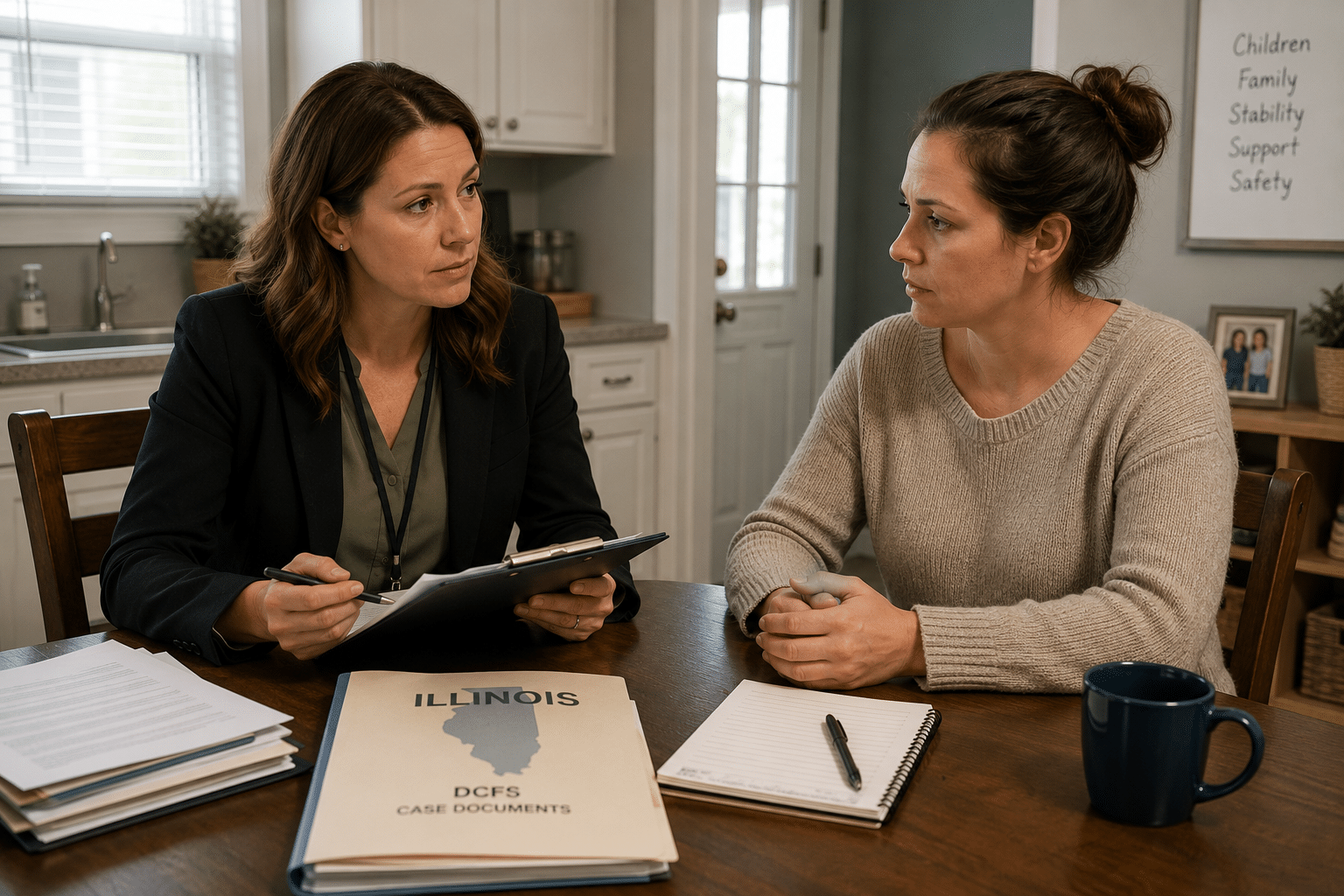
Allegations of child abuse can transform an already difficult divorce or parenting dispute into an urgent and highly complex legal matter. When a parent believes that a child is being physically harmed, sexually abused, emotionally mistreated, neglected, or exposed to a dangerous environment, the concern must be taken seriously. At the same time, an allegation can have profound consequences for a parent who is accused, including supervised parenting time, emergency court orders, a Department of Children and Family Services investigation, or temporary separation from the child.
Illinois courts must balance two essential concerns. The first is protecting children from conduct that threatens their physical, mental, moral, or emotional well-being. The second is ensuring that decisions affecting a parent-child relationship are based on reliable evidence and a fair legal process rather than suspicion, anger, or unsupported accusations.
Cases involving alleged abuse require prompt action, careful documentation, and experienced legal guidance. Whether you fear that your child is in danger or believe you have been falsely accused, understanding how Illinois courts address these cases can help you protect both the child’s interests and your legal rights.
Although parents and members of the public commonly refer to these disputes as child custody cases, Illinois law now uses the term “allocation of parental responsibilities.”
Parental responsibilities generally include two related issues:
Illinois courts allocate both decision-making authority and parenting time according to the child’s best interests. The law does not require the court to divide decision-making equally between the parents, nor does it guarantee either parent a particular amount of parenting time. Instead, the judge must evaluate the family’s circumstances and determine what arrangement will best serve the child.
Evidence of abuse, domestic violence, neglect, substance misuse, threats, or other dangerous conduct can substantially affect both parts of the court’s decision.
Illinois courts consider all relevant factors when allocating parental responsibilities. These factors include the child’s needs, each parent’s history of participating in important decisions, the parents’ ability to cooperate, the child’s adjustment to home and school, and the mental and physical health of everyone involved.
The court must also consider any past or ongoing physical violence or threat of physical violence involving the child or another member of the household. Evidence of abuse may lead the court to give one parent sole responsibility for making significant decisions, particularly when cooperation with the other parent would expose the child or the protected parent to additional danger.
For example, a court may determine that a parent who has physically abused a child should not participate in healthcare or educational decisions. In another case, the court might permit limited decision-making involvement but establish safeguards governing communication between the parents.
The specific outcome depends on the severity, frequency, credibility, and recency of the alleged conduct.
Child abuse cases are not limited to visible physical injuries. Courts may consider a broad range of conduct that endangers a child or significantly harms the child’s development.
Physical abuse may include hitting, punching, kicking, burning, choking, shaking, throwing, or otherwise intentionally injuring a child. It may also involve excessive or inappropriate physical discipline.
Relevant evidence can include photographs, medical records, emergency room reports, statements made to healthcare providers, witness testimony, police reports, and DCFS findings.
A court may distinguish between lawful parental discipline and conduct that is excessive, injurious, or abusive. The surrounding circumstances, the child’s age, the nature of the force used, and the resulting injuries may all be important.
Allegations of sexual abuse require immediate attention and careful handling. Sexual abuse may involve inappropriate touching, sexual contact, exploitation, exposing a child to sexual material, grooming behavior, or permitting another person to abuse the child.
These cases may involve law enforcement, DCFS investigators, medical professionals, therapists, forensic interviewers, and child advocacy centers. Parents should avoid repeatedly questioning a child or attempting to conduct their own investigation. Repeated or suggestive questioning can increase the child’s distress and may affect the reliability of later statements.
Emotional abuse may be more difficult to document because it does not always produce visible injuries. It can include persistent humiliation, intimidation, rejection, threats, extreme verbal attacks, manipulation, isolation, or conduct intended to cause the child fear or emotional instability.
A parent may also harm a child by repeatedly exposing the child to intense domestic conflict, encouraging the child to fear or hate the other parent, using the child to deliver hostile messages, or making the child responsible for adult disputes.
Evidence may come from therapists, teachers, school counselors, pediatricians, relatives, parenting coordinators, or other adults who have observed changes in the child’s behavior.
Neglect generally involves a failure to provide the supervision, care, food, shelter, medical treatment, education, or protection reasonably necessary for the child.
Examples may include leaving a young child unattended, failing to obtain necessary medical care, maintaining an unsafe home, repeatedly exposing the child to dangerous people, or caring for the child while severely impaired by alcohol or drugs.
A single disagreement about parenting style does not necessarily establish neglect. The court will examine whether the alleged conduct created a genuine risk to the child’s safety or welfare.
A child does not have to be the direct target of physical violence for domestic abuse to affect a parenting case. Witnessing violence between parents or living in a home dominated by threats, intimidation, coercive control, or repeated conflict can significantly harm a child.
Illinois courts may consider violence or threats directed toward the other parent, a household member, or the child when deciding parental responsibilities and parenting time.
There is a persistent belief that abuse allegations are routinely fabricated during divorce and custody litigation. That assumption is dangerous because it can cause genuine concerns to be dismissed without proper investigation.
False or exaggerated allegations can occur. However, courts should not presume that a report is untrue merely because it arises during a divorce or parenting dispute. Nor should the court assume that an accusation is accurate simply because it is serious.
The proper focus is the evidence.
Judges evaluate the timing of the report, consistency of the allegations, statements made by the child, corroborating records, witness testimony, investigative findings, prior conduct, and the credibility of the adults involved. A report made during litigation may still be entirely legitimate. Conversely, an allegation may lack adequate support even when the person making it sincerely believes it to be true.
Removing outdated or generalized statistics from the analysis is important because every child abuse case turns on its own facts.
A parent who believes a child is in immediate danger should contact law enforcement or emergency services.
Suspected abuse or neglect may also be reported to the Illinois Department of Children and Family Services. DCFS accepts reports through its child abuse hotline and online reporting system. The agency determines whether a report meets the legal criteria for investigation.
Certain professionals, including teachers, doctors, nurses, therapists, childcare workers, and other mandated reporters, may be legally required to report suspected child abuse or neglect.
A parent should provide accurate, specific information rather than assumptions or conclusions. Helpful details may include:
Parents should avoid coaching the child, asking leading questions, or repeatedly requesting that the child retell the incident.
A DCFS investigator may interview the child, the parents, siblings, teachers, medical professionals, childcare providers, and other people with relevant information. The investigator may also inspect the home, review records, and coordinate with law enforcement.
At the end of the investigation, DCFS may classify the report as indicated or unfounded.
An indicated finding means the agency concluded that there was credible evidence supporting the allegation under its administrative standards. An unfounded finding means DCFS did not find sufficient evidence to indicate the report.
Neither result automatically decides the family court case. A family court judge makes an independent determination based on the evidence presented in the parental-responsibilities proceeding.
An indicated DCFS finding can be significant, but it does not automatically eliminate parenting time. Likewise, an unfounded finding does not necessarily prove that the reported conduct never occurred. Different proceedings may involve different evidence, legal standards, and purposes.
Yes. Illinois law permits a court to restrict parental responsibilities when the evidence shows serious danger to the child.
After a hearing, if the court finds by a preponderance of the evidence that a parent engaged in conduct that seriously endangered the child’s mental, moral, or physical health, or significantly impaired the child’s emotional development, the court must enter orders necessary to protect the child.
The preponderance standard generally requires proof that the allegation is more likely true than not true. This is a lower burden than the beyond-a-reasonable-doubt standard used in criminal cases.
Possible restrictions include:
In severe cases, the court may deny parenting time when no less restrictive arrangement can adequately protect the child.
Supervised parenting time allows a parent to see the child while another approved adult or professional supervisor is present.
Supervision may occur through a professional visitation facility, social service agency, family member, therapist, or another person approved by the court. The order may specify the location, duration, frequency, supervisor, and conditions governing each visit.
Supervised parenting time may be appropriate when the court believes that maintaining some contact is beneficial but unsupervised contact would present an unacceptable risk.
The court may later expand or reduce the parent’s time depending on compliance, treatment progress, the child’s response, and whether safety concerns continue.
A parent does not always have to wait for a final trial when a child faces an immediate threat.
Illinois courts may enter temporary orders allocating parental responsibilities before a final judgment. Temporary relief may be appropriate when the available facts indicate that immediate changes are necessary to protect the child.
Depending on the circumstances, a parent may request:
Illinois provides standardized court forms for seeking an order of protection. An emergency order may sometimes be entered without advance notice when the legal requirements are satisfied, although the accused person must later receive an opportunity to appear and respond.
Emergency filings should be supported by specific facts, dates, records, and other available evidence. General statements that a parent is “dangerous” may be insufficient without details explaining the immediate risk.
The court may consider many types of evidence, including:
The credibility and admissibility of evidence are often contested. A screenshot without context, for example, may be less persuasive than a complete message thread supported by testimony establishing who sent it.
Parents should preserve original records and avoid editing, cropping, annotating, or altering potential evidence.
Children are not automatically required to testify in open court. Judges generally try to avoid placing children directly in the middle of their parents’ dispute.
Depending on the child’s age and maturity, the court may consider the child’s wishes. However, the child’s preference is only one factor and does not control the outcome.
The court may appoint a guardian ad litem, child representative, or attorney for the child. A guardian ad litem investigates the case and makes recommendations concerning the child’s best interests.
The court may also conduct an interview with the child outside the presence of the parents under appropriate circumstances. The method used depends on the child’s age, the nature of the allegations, and the judge’s determination of what will protect the child while producing reliable information.
A parent accused of abuse has the right to receive notice of the court proceedings, retain an attorney, present evidence, challenge opposing evidence, question witnesses, and participate in hearings.
The accused parent should comply with all temporary orders, even if the allegations are believed to be false. Violating a restriction, confronting the accusing parent, or attempting unauthorized contact with the child can seriously damage the defense.
The parent should preserve relevant evidence, identify witnesses, document compliance with court orders, and work through legal counsel. Publicly attacking the other parent or discussing the case on social media is rarely helpful.
An unsupported allegation should not permanently determine the parent-child relationship. However, effectively responding often requires more than simply denying the accusation.
Illinois courts may consider a parent’s willingness and ability to support the child’s relationship with the other parent, provided that relationship can be maintained safely.
A knowingly fabricated abuse claim may therefore affect the court’s evaluation of credibility, cooperation, judgment, and the child’s best interests. It may also lead to attorney-fee disputes, sanctions, or modification of parental responsibilities in particularly serious cases.
However, an allegation that is not proven is not automatically a deliberately false allegation. A parent may make a good-faith report based on concerning information even when an investigation does not produce enough evidence to substantiate it.
Courts must distinguish between intentional fabrication, honest mistakes, misunderstandings, and allegations that remain uncertain because of limited evidence.
Restrictions do not always remain in place permanently.
A restricted parent may seek modification after addressing the conduct that led to the restriction. Relevant progress may include:
The court will evaluate whether removing or reducing the restriction is consistent with the child’s best interests and whether the original danger has been adequately addressed.
Parenting plans can be modified when the applicable statutory requirements are met. In many cases, the parent requesting a change must show changed circumstances and establish that modification is necessary to serve the child’s best interests.
A concerned parent should focus on protection, documentation, and appropriate legal channels.
Seek emergency assistance when there is an immediate threat. Preserve evidence without altering it. Write down the child’s exact words rather than summarizing or interpreting them. Obtain medical care when needed. Notify appropriate authorities. Follow existing court orders unless emergency circumstances require immediate intervention, and consult an attorney about requesting a lawful modification.
Do not retaliate against the other parent, coach the child, post allegations online, or prevent court-ordered contact without obtaining legal advice. Even a parent acting from genuine fear can create additional legal problems by handling the situation improperly.
Child abuse allegations require a careful legal response because the consequences can affect a child and both parents for years. A parent who believes a child is unsafe may need immediate court intervention, protective restrictions, or assistance coordinating with DCFS and law enforcement. A parent who has been falsely accused needs a fair opportunity to challenge the evidence and protect the parent-child relationship.
Gordon & Perlut, LLC represents parents in Chicago, Skokie, Cook County, and surrounding Illinois communities in cases involving parental responsibilities, parenting-time restrictions, abuse allegations, DCFS investigations, emergency motions, and orders of protection.
Contact Gordon & Perlut, LLC at our Chicago office at 312-360-0250 or call our Skokie office at 847-329-0101 to speak with an experienced Chicagoland child custody attorney about protecting your child, responding to allegations, and pursuing a parenting arrangement that serves the child’s best interests.
This article is intended for general informational purposes and does not constitute legal advice for any individual case.
